
How ancient remedies are leading to modern medicine
Dr Helen Woolner is bringing together Pacific wisdom with cutting-edge chemistry to identify substances that hold promise as new antimicrobial drugs.
For centuries, naturally occurring products such as plants and minerals have been used to guide healing practices in cultures around the world. Now, a researcher at Te Herenga Waka—Victoria University of Wellington is bringing traditional Pasifika wisdom into a high-tech laboratory setting, with the aim of developing vitally important new medications.
Dr Helen Woolner—who’s a senior lecturer in the School of Biological Sciences—is hoping to bring an urgently-needed new generation of antimicrobial drugs to the market, by identifying and reproducing the active therapeutic compounds found in plants and marine organisms from the Pacific.
Uncovering the cutting-edge chemistry behind traditional therapies
Helen co-leads an innovative research project into the medicinal properties of a specific plant used traditionally for healing in Sāmoa. Working with virologist Dr Natalie Netzler from the University of Auckland, and scientists at the Scientific Research Organisation of Samoa, the project is funded by a grant from the Health Research Council.

“Samoan people still widely use natural medicines to look after their health, and sometimes they are used alongside Western clinical ones.”
“This study investigates the natural products responsible for the antimicrobial properties of traditional Samoan medicinal plants commonly used for treating viral-related symptoms. We want to understand how these active ingredients work to treat things like SARS-CoV-2 (Coronavirus) or influenza, and also how they function in combination with some of the current clinical medicines used for those viruses,” she explains.
“Using the two together could complement each other in a positive way, which would be great, but if they cancel each other out or negatively interact, then you don’t want to be using both medicines in combination. This is what this study is looking into.”
The deep-dive for new medicines
In another major project, Helen is looking to the Pacific Ocean as a potential source of antimicrobial substances, which may hold the key to developing critically-needed new antibiotic medications.
Disease-causing bacteria are becoming increasingly resistant to antibiotics. This is leading to an escalating medical crisis where we may lack effective treatments for serious and potentially life-threatening infections.
Dr. Helen Woolner
Senior Lecturer in Chemical Biology
Many antibiotics we use today were originally sourced from land-based organisms like bacteria or fungi, which is why the search needs to turn to new sources—in Helen’s Royal Society-supported project, that means looking to the marine environment.
“Starting with traditional Pacific Indigenous knowledge as a basis and working with scientists at the Scientific Research Organisation of Samoa, as well as Dr Teina Rongo at Kōrero O te Ōrau in Rarotonga, we’re collecting promising marine organisms from the Cook Islands and Sāmoa to uncover any natural chemicals with antimicrobial activity that exist within marine fungi and bacteria,” she says.
“I’m interested in microbes like fungi and bacteria that live within host organisms, like sponges and seaweed.”
After gathering the samples, Helen and her research collaborators take them into a lab where they’re sterilised, ground up, and applied to a growth medium. It grows into colonies of bacteria that are then separated and narrowed down to a specific bacterium.
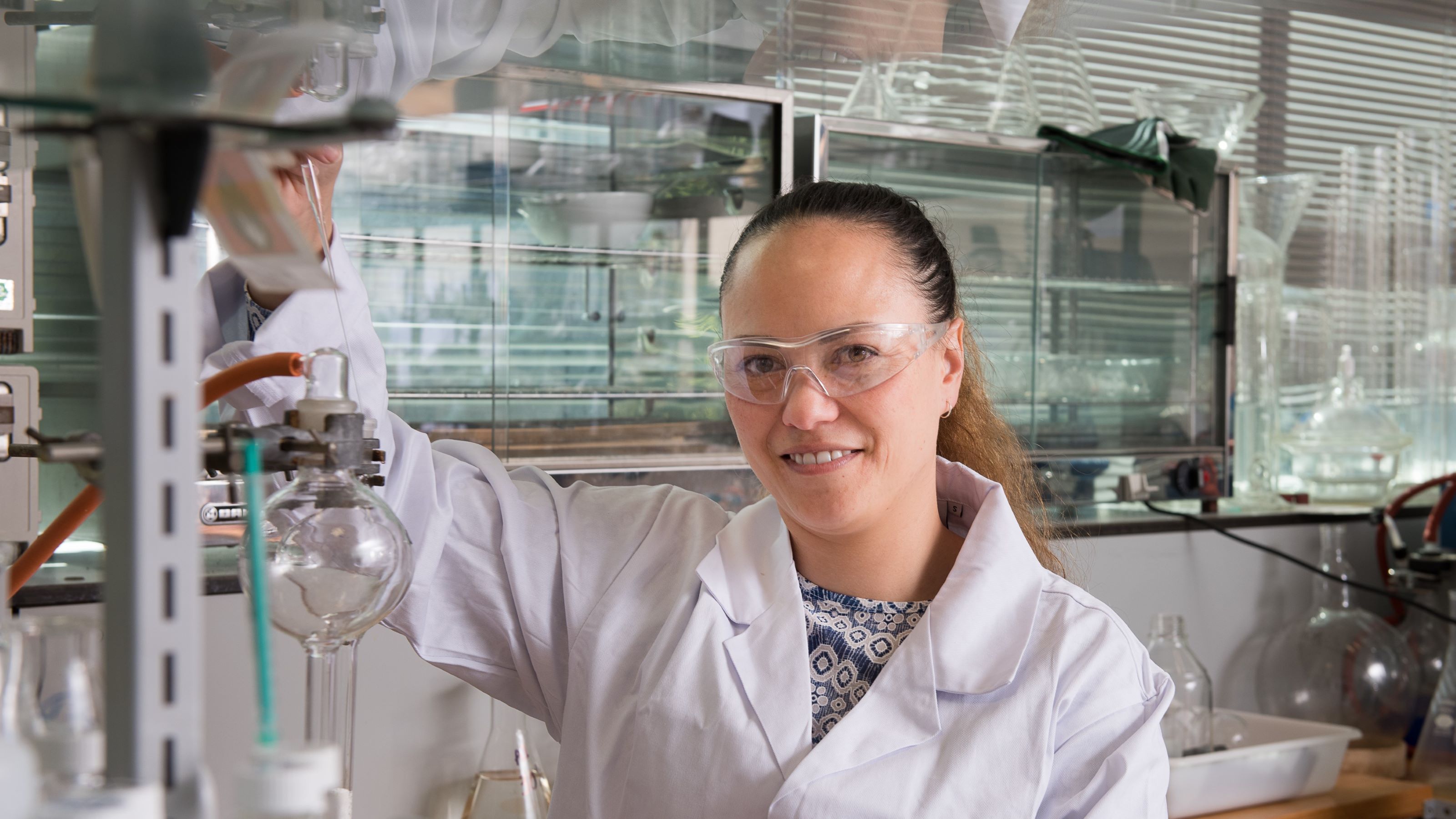
“I’m looking at particular parts of the genomes of these bacteria and fungi, and comparing that against online databases, which can help you identify what class of natural molecule it is—whether it’s a peptide and what that peptide might look like, for example.
“This helps to give us an idea of what its biological function might be, and whether it’s already been identified previously—we’re trying to find new antibiotic activity, so we don’t want to be isolating something that’s already been discovered,” says Helen.
Maximising the benefits of traditional knowledge
Helen, who is Cook Island Māori, is proud to be able to do research that is closely connected to her own cultural heritage.
“It’s awesome to be able to work with my Pacific collaborators. We are intentionally focusing on organisms that have some bearing on traditional usage, because legal protections are starting to be introduced by some Pacific governments for customary knowledge intellectual property,” says Helen.
“That means any benefits that are eventually derived—proceeds from a new medicine that is brought to market, for example—will filter back to the place where the traditional knowledge and the organism itself originally came from.”
Helen’s hope is that her work in the region will encourage a new generation of Pasifika scientists.
It’s really important that budding Pasifika scientists see how high-tech science draws on traditional knowledge, and understand that they have lots to contribute themselves.
Dr. Helen Woolner
Senior Lecturer in Chemical Biology
Helen says traditional knowledge about natural medicines and toxins has played a crucial role in the development of many modern drugs, because it provides valuable insights that have been honed over generations of use. It was also a cherished part of Helen’s own upbringing.
“I grew up with traditional medicines. My grandma and my mum would use them all the time, not in replacement of clinical medicines but in addition—if I had a sore tummy, they’d prepare something I could take,” she says.
“I didn’t really think too much about it until I was a student at Victoria, and learned about the swan plant in a biology course. Swan plants produce a natural compound that makes them toxic to animals that eat them, except for Monarch butterfly caterpillars, which are able to graze on the swan plant and sequester the toxins into their own tissue. They then become toxic and are protected from predators.
“That’s when I made the connection about why I was given these medicinal plant juices when I was younger—I knew it was because I was sick, but I never realised until then that it was because they contain active natural products that are beneficial.”
Helen progressed through university to do a PhD in chemistry, and says she received a lot of support and encouragement through internships and lab placements to find her passion in the chemistry of natural products.
“I’m super passionate about building the next generation of scientists, and in particular I want to get more Māori and Pasifika students into science,” she says. “Diversity is good—different backgrounds, different experiences and different ways of thinking bring richness to any kind of cohort where collaborative thinking is required.”
Learn more about research at Te Kura Mātauranga Koiora—School of Biological Sciences.